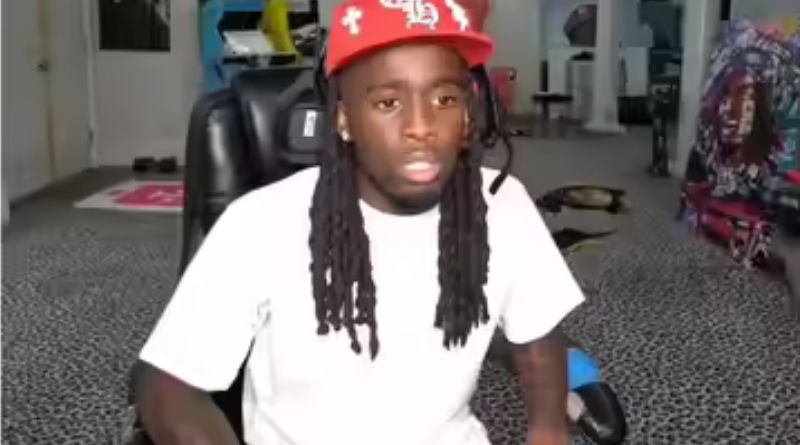
From YouTube Comedy Clips to the Most-Subscribed Streamer on Twitch
There is a version of the Kai Cenat story that starts with comedy skits uploaded to YouTube in the late 2010s and ends with a net worth of $45 million — but that summary skips over everything that makes the journey actually interesting. What Kai Cenat built was not an overnight success or a lucky break. It was a methodical, personality-driven climb that started with prank-style videos designed to grab attention fast and evolved into something that genuinely reshaped how people think about streaming culture and creator-led media. Those early YouTube videos were not polished or expensive — they worked because of high-energy humor, exaggerated reactions, and the kind of viral clips that spread through internet culture on their own momentum. He was building an early audience one video at a time, and that audience was loyal in the way that only audiences built around genuine personality tend to be.
The pivot to livestreaming is where everything accelerated. Twitch became the platform where Kai Cenat‘s energy translated most powerfully, and he approached it differently from most creators who simply went live and played games. He built an event-based streaming model that fused gaming, comedy, and celebrity-driven spectacle into something that felt more like a live public event than a standard broadcast. His streams regularly featured high-profile guests from music, sports, and internet culture, pulling in names that blurred the line between traditional entertainment and what a YouTuber with a camera and a Twitch account could produce independently. Those streams drew massive audiences and enormous crowds of online viewers who showed up not just to watch games but to be part of something that felt genuinely unpredictable and alive. The result was platform records that reflected real cultural momentum — at various points, Kai Cenat held the title of most-subscribed streamer on Twitch, a milestone that put him in a conversation that extended well beyond the creator space and into discussions about earning power and influence that had previously been reserved for traditional celebrities.
AMP, Collaborative Content, and the Creator Collective That Amplified Everything
One of the less discussed but genuinely important factors in Kai Cenat‘s rise to a $45 million net worth is his involvement in the creator collective AMP — which stands for Any Means Possible. The group includes fellow influencers Fanum, Duke Dennis, and Agent 00, and what they built together represents one of the more successful experiments in group-based creator brands that the modern internet economy has produced. Collaborative content between members of AMP created a multiplier effect that benefited everyone involved, but Kai Cenat arguably benefited most because his individual personality was already the strongest draw. The collective functioned like one of the early digital entertainment studios — producing content with enough consistency and cross-promotion to build audience loyalty across multiple platforms simultaneously. For anyone who studies how creator-led media works at scale, the AMP model is worth paying close attention to, because it demonstrated that group-based creator brands could compete seriously with traditional media infrastructure without any of the traditional overhead.
The collaborative content coming out of AMP also helped Kai Cenat maintain visibility during periods when individual output naturally slows, and it reinforced his position in internet culture as someone connected to a broader creative ecosystem rather than a solo act dependent entirely on his own schedule and energy. That kind of network effect is genuinely valuable in a space where fanbase loyalty can shift quickly and controversies — which have touched Kai Cenat‘s career at various points due to the scale and intensity of his following — can threaten to derail momentum. The AMP foundation gave him something to stand on beyond his individual output, and it contributed meaningfully to the cultural impact that has made his name recognizable to people who may never have watched a single one of his marathon broadcasts.
Brand Partnerships, Music, and the Full Picture Behind the $45 Million
The financial architecture of Kai Cenat‘s $45 million net worth extends well beyond Twitch subscriptions and YouTube ad revenue, though both of those contribute significantly. His expansion into brand partnerships reflects the kind of mainstream crossover appeal that most live streamers never achieve regardless of their subscriber counts. He secured deals with major companies by demonstrating that his audience was not just large but deeply engaged — the kind of fanbase that actually responds to the products and brands a creator promotes, which is ultimately what media attention and advertising dollars follow. His work in music-related content added another dimension to a public profile that was already operating across more categories than most creators manage, and it connected him to audiences in music and sports who might not have found him through gaming or comedy alone.
The live public events connected to Kai Cenat‘s brand have drawn enormous crowds and generated the kind of media attention that money cannot simply buy — it has to be earned through genuine cultural relevance. His ability to mobilize massive audiences both online and in physical spaces speaks to a level of cultural impact that places him alongside traditional celebrities in terms of real-world influence, even if the mechanisms through which he built that influence look nothing like the traditional path. The earning power he has developed through spectacle-driven livestreaming, brand partnerships, music-related content, and collaborative content within AMP represents a genuinely new model for financial success in the modern internet economy — one where a rapper, YouTuber, and live streamer operating at the intersection of gaming, comedy, and celebrity-driven spectacle can build a net worth of $45 million without ever needing the traditional gatekeepers of traditional entertainment to open a single door.